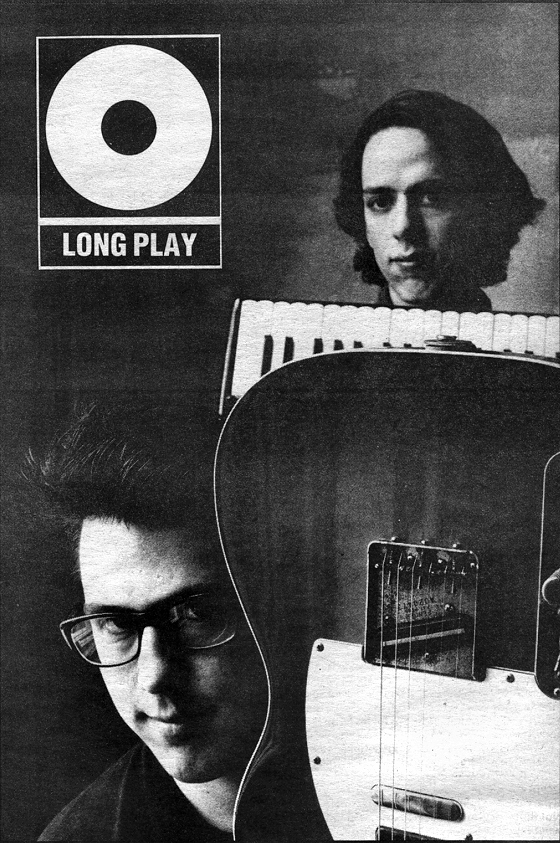
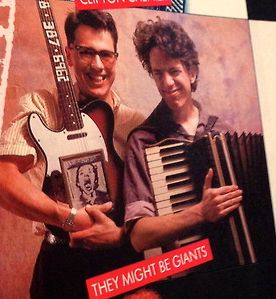
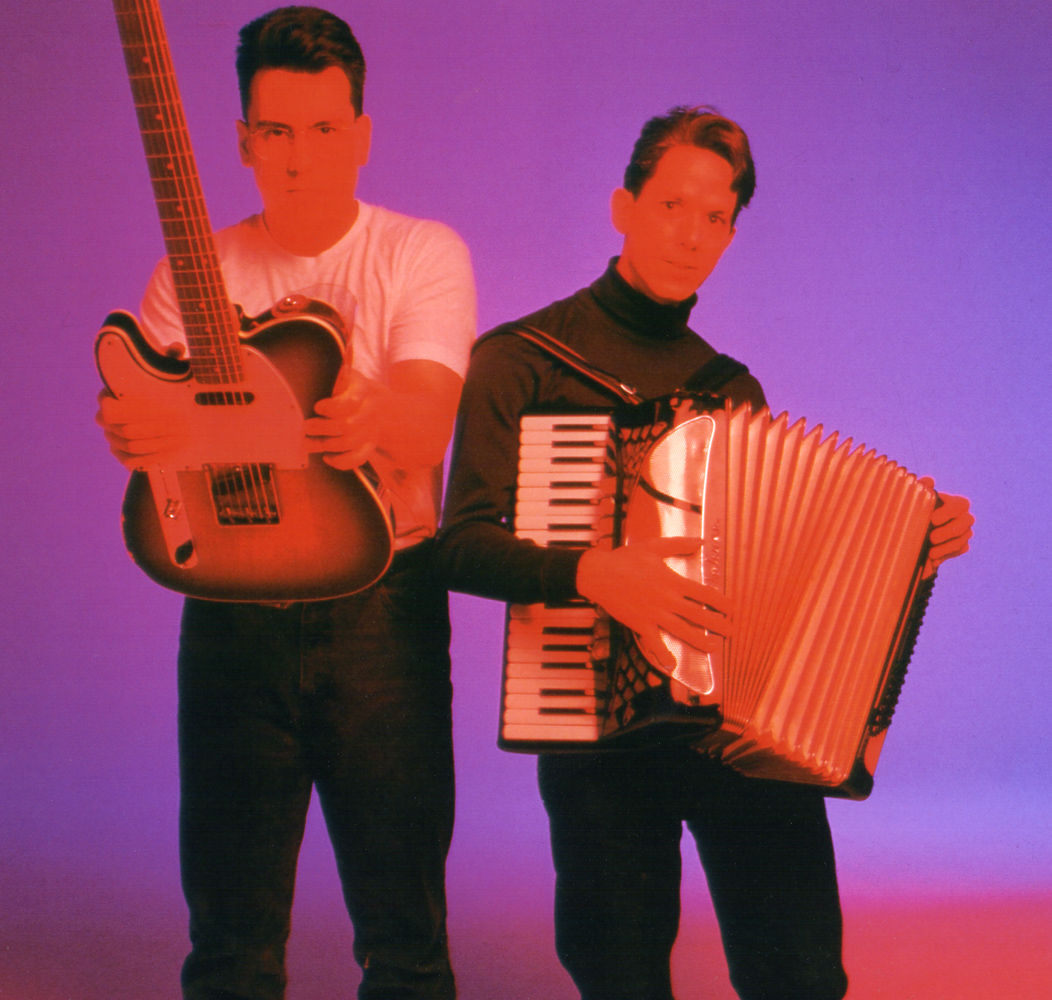
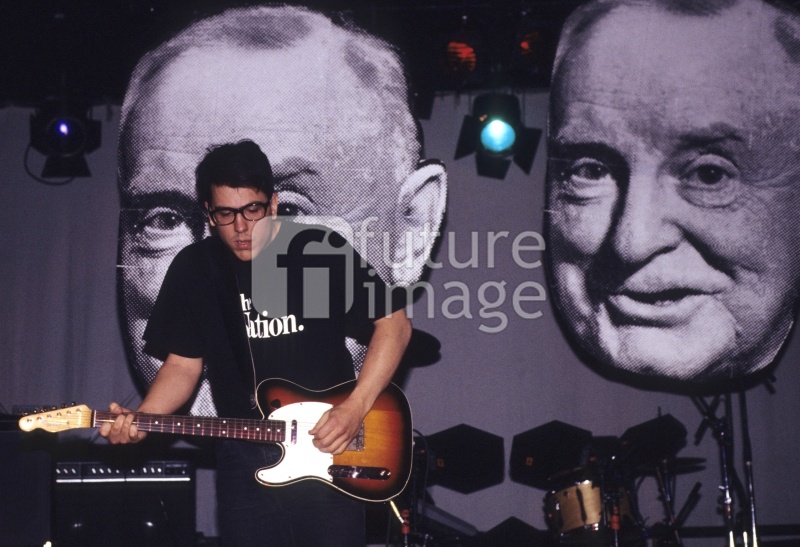
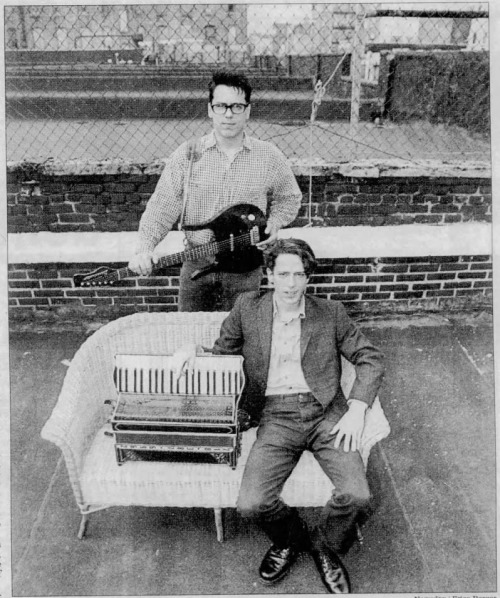
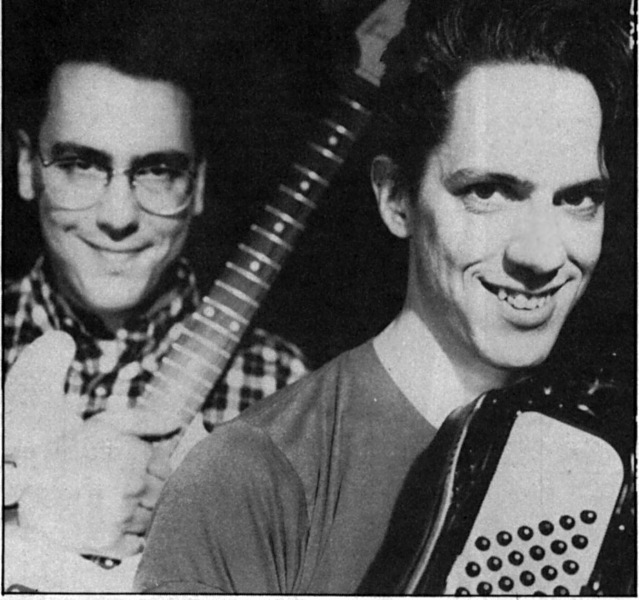
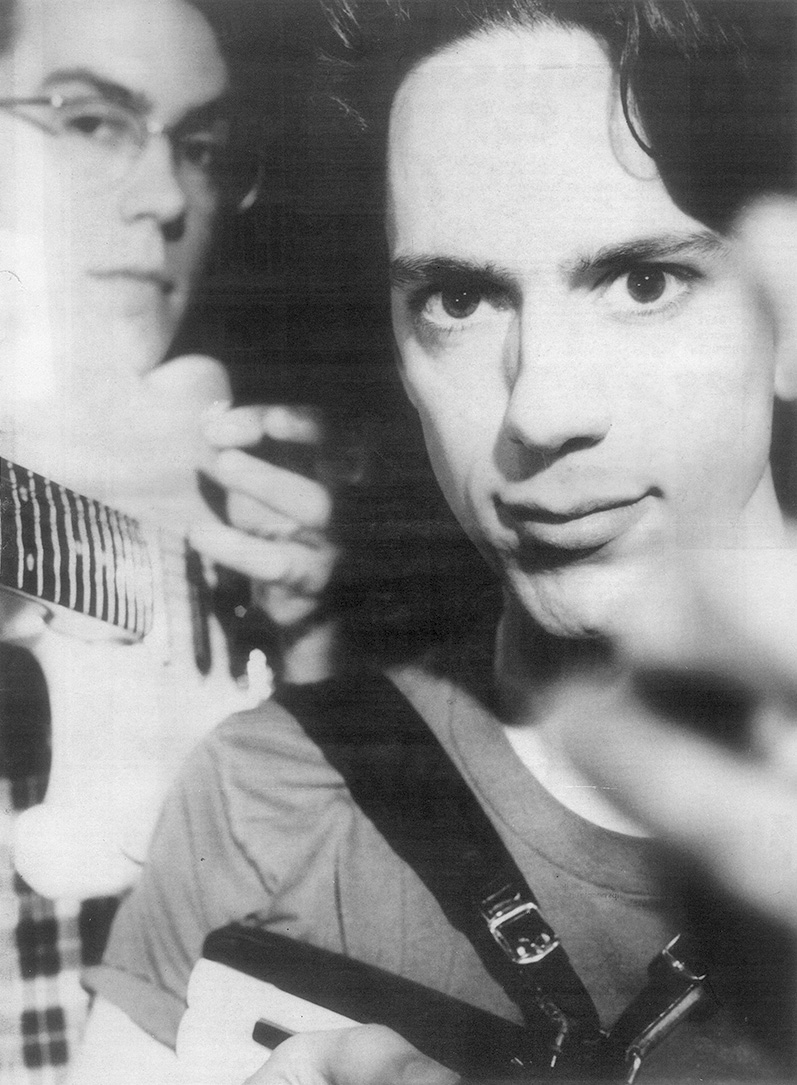
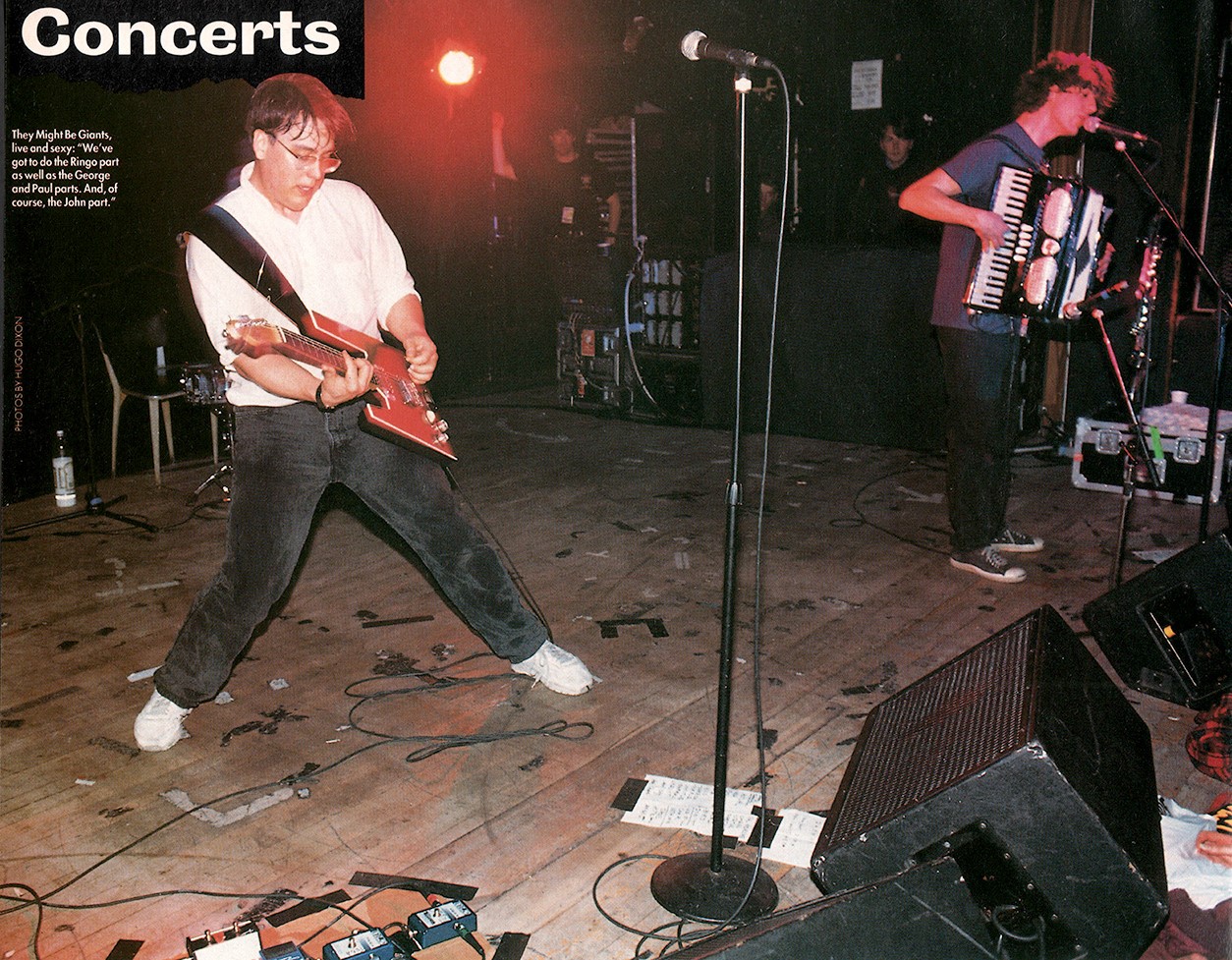
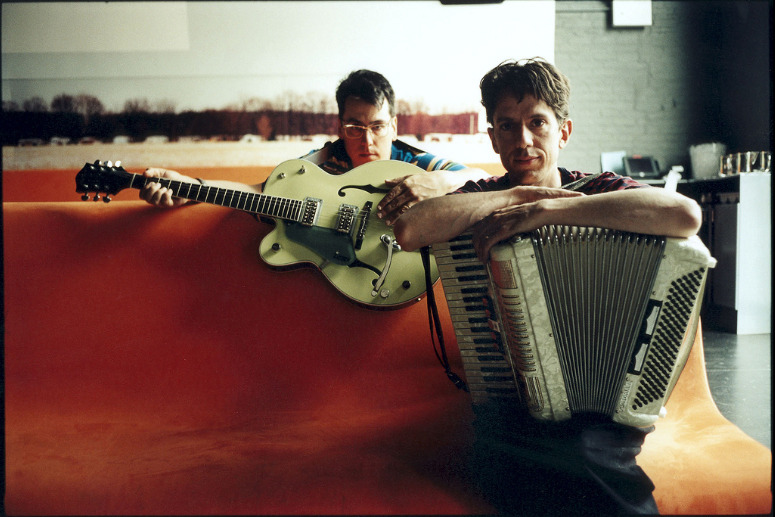
John Conant Flansburgh was born on May 6th, 1960 and is a co-founder of TMBG along with John Linnell. His primary instrument is the guitar, though on occassion he has been known to play instruments such as bass drum and trumpet.

This was Flans' very first guitar, on which he learned to play while working in a Washington, D.C. parking lot. He used the Mustang as his main instrument in his pre-TMBG bands The Blackouts and The Turtlenecks, and it appears in an undated pre-TMBG photo.
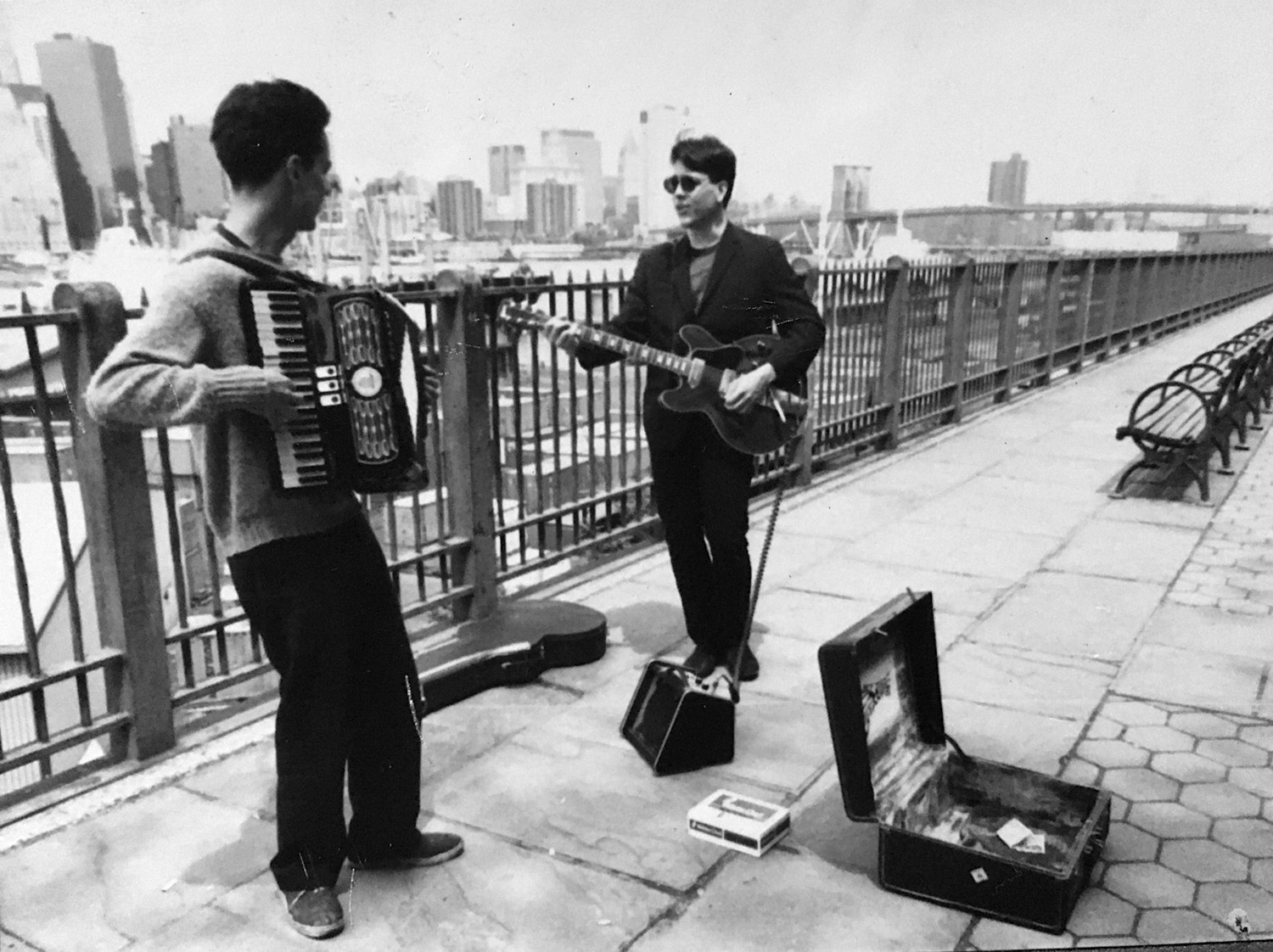
Flansburgh says he acquired this guitar when he was in college, likely while he was at Pratt Institute. It came to him with a truss rod cover on which the word “Jumbo” was inscribed upon it. The Gibson Les Paul Jumbo was a short-lived acoustic version of the Les Paul model manufactured from 1969 to 1973 which had “Les Paul Jumbo” engraved on its truss rod cover - this may have been where Flans’ came from. The guitar was used in the band’s earliest days and no doubt featured in many shows and demos from their first year together. Sadly, the instrument was stolen from Flansburgh’s apartment in a home invasion which occurred in late 1983.
Flansburgh identifies this guitar as being the “silver guitar” mentioned in the lyrics to “Number Three” in a Tumblr post from March 27th, 2025. It is also the guitar he says he used to write the song.
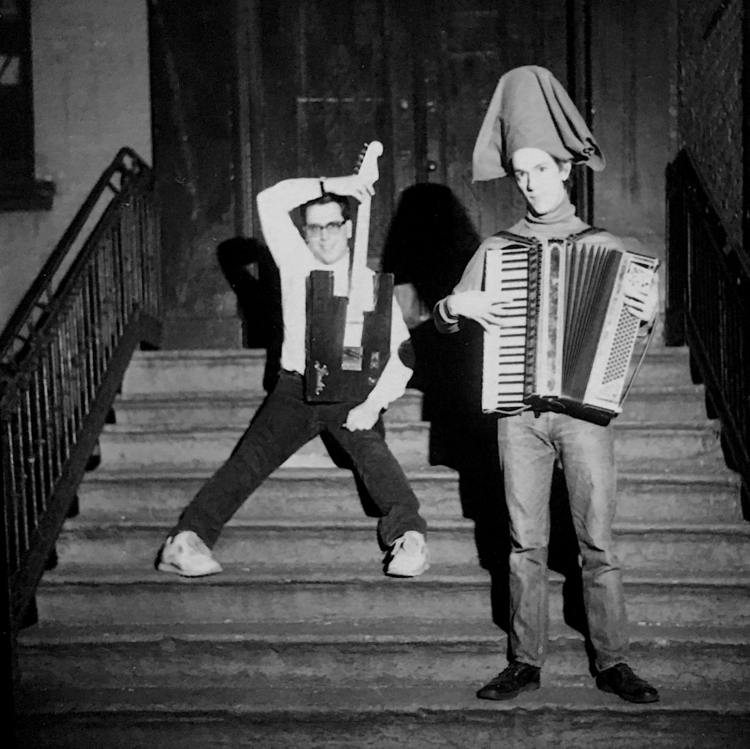
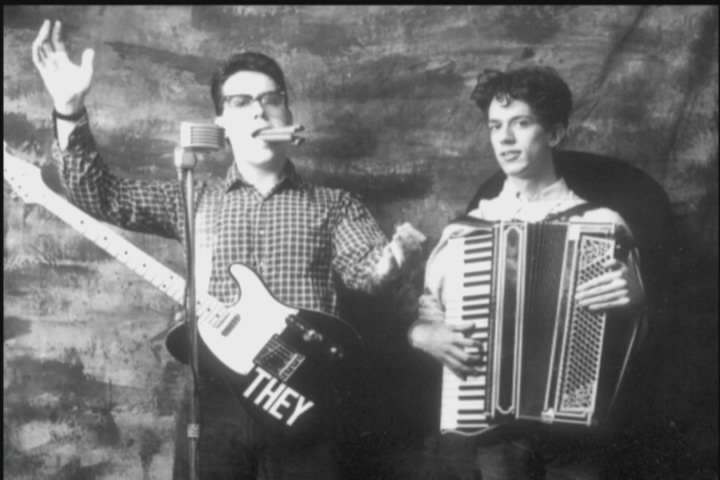
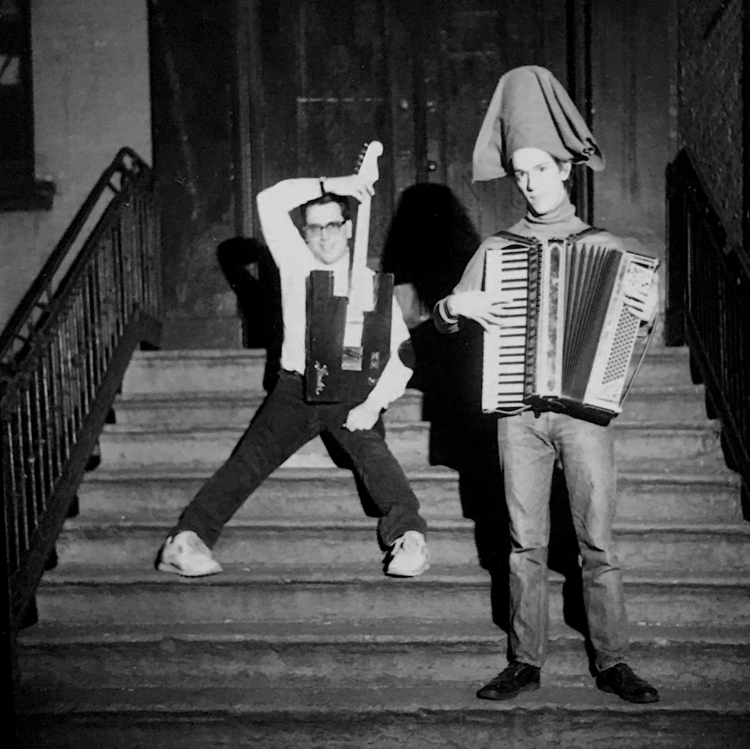
This guitar was the basis for the “Chessmaster” design made by Mojo Guitars in the 1990s. It appeared to initially have a fish-hook style headstock design not normally found on Fernandes guitars of this type. Photo shoots from around 1984-85 show it with a large THEY formed with tape applied sideways near the master controls. It is seen in its Chessmaster form, “realized with foam core and duct tape” at TMBG’s February 23rd, 1985 show at Darinka. A photo post-retrofit also shows a Fender logo taken from a guitar case attached sideways to the left hand side of the instrument. It is likely this guitar was used on early demo tapes.

Flansburgh used this guitar extensively from 1985 to 1986, before the Japanese Telecaster Custom became his primary guitar. He has gone on record as saying most of the whammy bar work on Lincoln was done on this guitar, and it is more than likely that the electric guitar parts on the band's self-titled album was also done with this instrument. In most existing documentation it is seen with a large THEY formed with tape across the bottom, along with tape on the neck corresponding to fretboard markers.

Little documentation about this guitar exists, although what does survive indicates that this was probably Flansburgh’s main acoustic before the acquisition of his L-50. This guitar features prominently in the band’s first publicly released music video (the first being an unreleased video made for Rabid Child in 1985) for "Put Your Hand Inside The Puppet Head". A surviving photo from the band’s October 4th, 1987 performance at Speakerkits shows that Flansburgh used the guitar during the show. In between these two events the white pickguard on the guitar was removed.
Bo Diddley was a highly influential figure in early rock and roll, famous for popularizing the “Bo Diddley beat”, named after its inclusion in his landmark 1955 single named after him. Sometime around the late 1950s Diddley began using a guitar shaped like a cigar box, and he would continue using variations of this design throughout the rest of his career. This guitar was loaned to Flansburgh during the shooting of the band’s music video for “(She Was A) Hotel Detective” and was allegedly made for Diddley by a NYC luthier. The pickguard was “unscrewed, flipped and taped on” for the shoot, according to Flans.

This guitar was a landmark moment in Flansburgh’s guitar playing, as it was his first true left-handed guitar - all other instruments before this one had to be converted from a right-handed playing style. Photographic evidence leads to the possibility that Flansburgh purchased the guitar prior to fall of 1986, which bore the serial number A020473.
One of the first modifications made to the instrument was the addition of large THEY and MIGHT decals across the front and back respectively, appearing that way starting in May 1987 and in promotional photos potentially dating back a bit before then. The decals would appear sporadically on the guitar until sometime after December 1988. Other photos from around the time show the Dial-A-Song number formed in tape along the fretboard. Between April and June 1988 the stock bridge pickup was removed, with a Seymour Duncan Hot Stack taking its place. The pickup selector switch tip and the tone pot appear to have been removed around that June as well. Between February and March 1989 the stock neck was replaced, its replacement bearing a decal reading “High Fidelity” and Sperzel locking tuners. Sometime between March and July of that year the Telecaster was outfitted with a set of EMG-T Active Pickups. The absence of a tone pot during this time was filled in by objects such as a nut and screw (seen on 1990-06-30) and a black knob. There is reason to believe the neck was broken again sometime between August 12th and October 31st, 1990.
The guitar was next seen on February 4th, 1992 after the band’s year-long touring hiatus, this time with a more stock appearance of a Fender replacement neck (possibly with Sperzel locking tuners) and traditional Telecaster-style pickups. It is possible that the neck broke yet again sometime between July 1992 and October 1994. During this period, a new neck with Sperzel locking tuners and a string tree going through the Fender logo were installed, along with a set of Joe Barden Danny Gatton T-styles and a new white pearloid pickguard. The “High Fidelity” decal from 1989 appears in the space between the bridge and the controls, though it has been modified to say “High F”. Flans says he retired it after the neck “had broken a 3rd time”, though it made two more appearances after 1994. The first was at a show occurring between December 1996 and January 1997, after a trailer theft resulted in the loss of the band’s current instruments, while the second took place in May 2000.

Flansburgh did not actually own this Longhorn, as it was borrowed from fellow musician Lary 7 of the Jickets. It had a Strat-style pickup configuration and “lipstick tube” pickups, with the spaces in between routed out for other pickups.
This Stratocaster made a few appearances at shows from March to December 1988, most likely as a backup instrument, as well as in some promotional photos from that year.
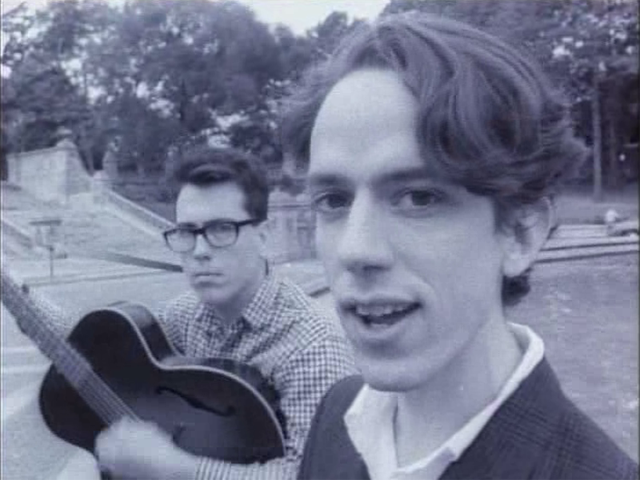
Flansburgh has stated that he bought this guitar with his first check from Bar/None. It was purchased from We Buy Guitars in New York City, whom also did repairs on it when "it exploded in my closet due to steam heat, and kind of looked like an exploded mobius strip with the sides completely separated from the top." It became his main acoustic through the late ’80s and was often seen as his guitar of choice for televised appearances on MTV and the like. It most likely saw use for Dial-A-Song demos and studio work, and it now lives at home with Flans where he describes it as his “couch guitar”. A new pick guard, reminiscent of the ones used on higher-end Gibson arch tops of the 1930s, was made for the guitar by Pickguardian in 2019.

This Longhorn, on the other hand, was owned by Flansburgh, and featured prominently in the “The Guitar” video. It had three aftermarket single coils, similar to a Stratocaster’s, and in the same configuration as the first guitar. The guitar appeared in a few articles published during the 2000s, at which point what looked to be Seymour Duncan Little 59’s replaced the aftermarket single coils. Flans says he sold the instrument “after many attempts to make it practical”.
This guitar is seen in unsourced photographs dating from around 1988/1989.
Prominently featured in the color sections of the "They'll Need A Crane" video, this guitar can be seen in a promotional photograph from around the time period. Based off appearance, this looks to be a rarer variant of this instrument featuring a headstock design that was more commonly seen on guitars sold under the Coral line of Danelectro products in the late '60s. One of the knobs has been removed, and what looks like a Seymour Duncan Hot Rail in the bridge position, replacing the standard "lipstick tube" pickup. A bridge with adjustable saddles has been installed in place of Danelectro's stock bridge, indicating that Flans likely intended to use this guitar.
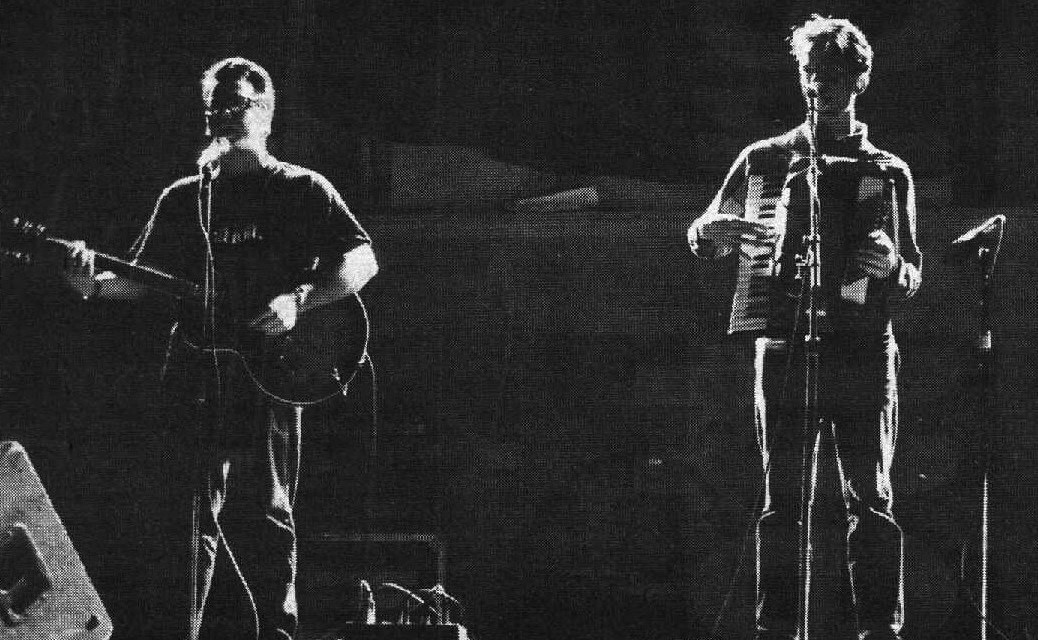
This guitar saw some use throughout late 1989 and early 1990, likely as a backup for shows. It can be seen most prominently in the “Particle Man” segment of the Elektra Records EPK for Flood.
This guitar was seen at a show in 1990 and has shown up in various promo photos from around the time.
This may have been a Japanese-made TL72. Flansburgh used this guitar on the Australasian leg of their 1990 world tour, and it may have made another appearance at one of the full band shows in 1992. The stock pickups seem to have been removed and replaced with Joe Barden Danny Gatton T-styles, a common staple in Flansburgh guitars at the time.
This copper DC-1 was featured in the “Birdhouse” music video.
Only seen once in a live performance on European television, this acoustic sports a florentine cutaway and large, oval-shaped sound hole. Both the Monterey and Woodstock share similar visual characteristics, making it hard to discern which specific model it is from the low quality video.
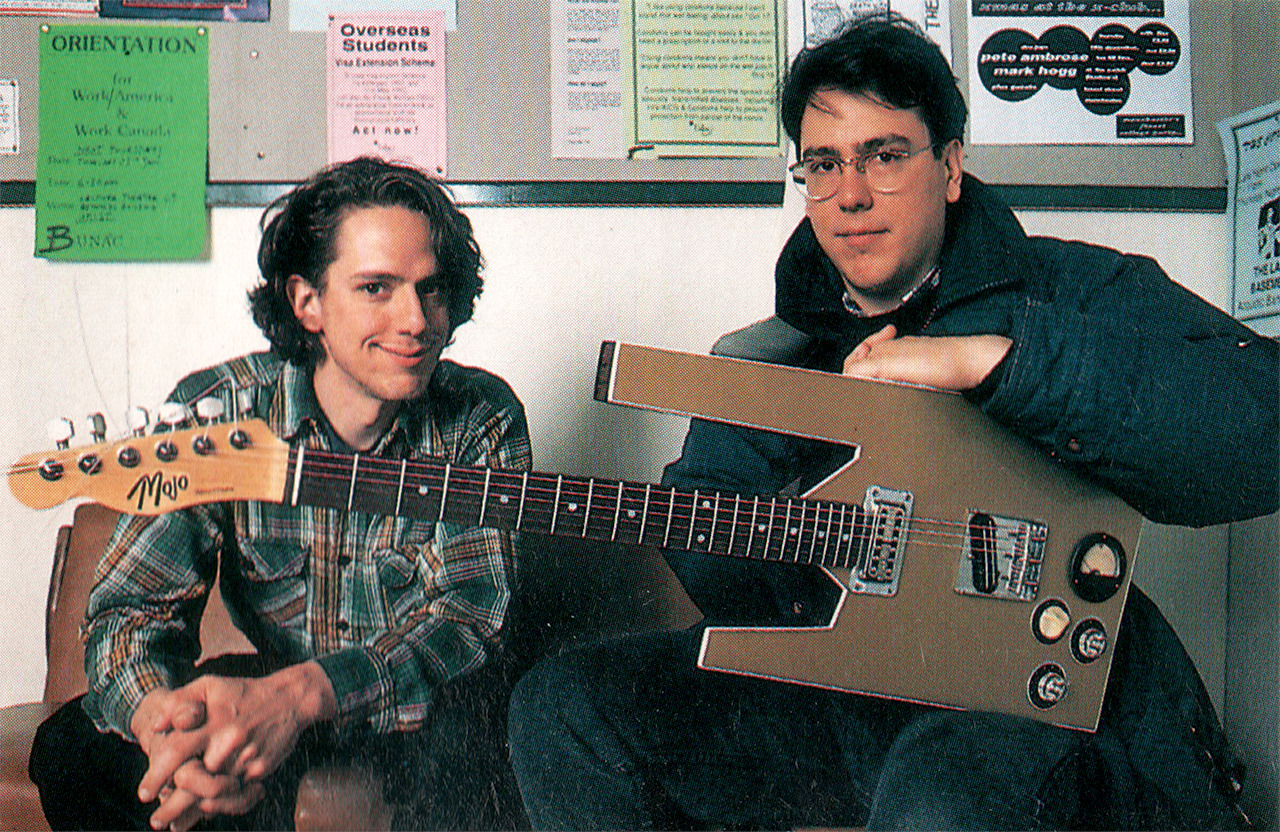
This guitar is an updated version of Flansburgh’s original Chessmaster prototype made in the mid-1980s. Chris Cush of Mojo Guitar Shop built the guitar for Flansburgh in 1991, and initially it did not come with a pickguard or VU meter on the lower half of the guitar. The VU meter was added to the instrument shortly after, and the instrument saw use on TMBG’s 1992 Apollo 18 tour. A vintage Gretsch Filtertron is installed in the neck position, while a Joe Barden Danny Gatton T-style is in the bridge. According to TMBW, “the guitar is wired for 5 pickup configurations: neck, bridge, both in series, both in parallel, both in series (out of phase).”
During 1996 a black semicircle pickguard was added to the guitar and was removed sometime in 1997. The guitar saw less use after the 1990s, but in 2011 Mike Buffington’s replica of the Chessmaster inspired Flansburgh to restore his own. Buffington also offered to install a working VU meter in Flansburgh’s original in 2013 - the previous one did not actually have a function. In preparation for TMBG’s ill-fated 2020 tour, Flansburgh had a white semicircle pickguard and new pickup ring installed onto the guitar in 2019. The instrument finally saw use again in 2022, 14 years after its last appearance at an in-store performance in 2008. Flansburgh said the guitar suffered tuning problems and as such it has not been used live since.

This Les Paul Custom saw a good amount of use by Flansburgh during the beginnings of the band’s full band years. Purchased in 1991, he would use the instrument from around 1992 to 1996. Its lack of appearances after that year was due to a trailer containing the band’s instruments being stolen that occurred after the band’s 1996-12-06 show. Flans has gone on record saying that the guitar was “sorta crappy”.
This guitar was seen for a time in late 1993 on live television performances. It is similar in model to Flansburgh’s later ES-335 Dot, but where it differs is the use of block rather than dot inlays on the fretboard, and the presence of a trapeze tailpiece rather than a stop tail. This feature was seen on ES-335s starting around 1965, and continuing until 1981 with the introduction of the ES-335 Dot.

This was the first of two goldtop Gibson Les Pauls Flansburgh would utilize while playing with TMBG. The P-90s in this model are of a single-coil design, unlike the humbuckers seen in the second model of goldtop Les Paul Flans would play. It saw limited use for the better part of a decade, right up until 2006, around the time the Custom Shop Telecaster was introduced into Flans’ rig. At some point during this time, it too had a truss rod cover with “Flans” engraved upon it, much like his ES-335 Dot. It made a surprise appearance at the 2011 Lincoln-themed show at Mohegan Sun because of a trailer fire the band experienced the prior week in Solana Beach, California.
This was the second of the goldtop Les Pauls, and appeared to have been used far less than its earlier counterpart. It saw use between late 1994 and late 1996, either relegated to backup or as a spare for smaller gigs.
This guitar was custom built by Gibson for Flansburgh and used during the John Henry sessions on songs such as “Sleeping in the Flowers”. It has seen use at in-store performances and other pared down gigs, such as their NPR Tiny Desk appearance in 2011.

Jerry Jones were known for their takes on Danelectro classics of the 1950s and 1960s, and their reissue of the Danelectro Model 4623 from the late ‘50s is no exception. This guitar first showed up in the music video for “Snail Shell” from John Henry, and appears as late as “Albany” from Venue Songs. It has appeared in promotional photos from the John Henry era as well as the Boss of Me music video.
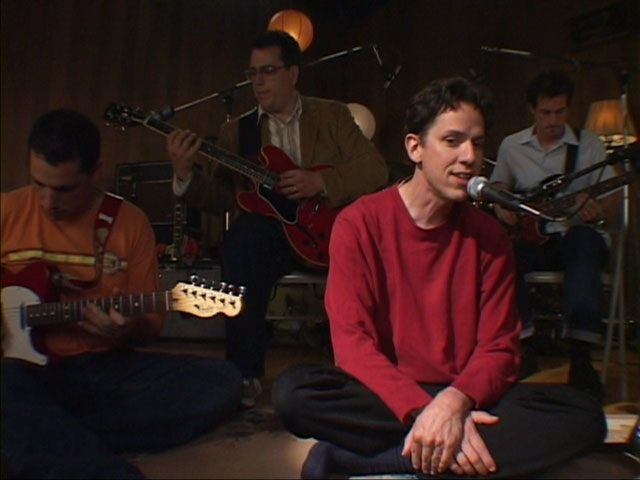
Following the theft of the Les Paul Custom, Flansburgh bought this ES-335, becoming his main instrument both live and in studio for almost a decade. It has stayed mostly stock throughout its lifetime, but modifications have been made. A custom engraved truss rod cover reading “Flans” upside down was installed around May 2005, and it appears on the guitar occasionally around this time period. A white “RG” decal, in reference to Robin Goldwasser, appears on the lower bout of the guitar during TMBG’s performance of “Older” on Late Night with Conan O’Brien on February 15th, 2001. A sticker of TMBG’s Spine-era logo appears in the same area during the band’s July 30th, 2004 show. After the acquisition of Flans’ Custom Shop Telecaster the ES was relegated to backup status, its most recent appearance being in the 2018 Rolling Stone “Take One” performance.
There is little documentation on this instrument, only appearing in a few shows in late 1997 and late 1998. The pickguard has been arranged so as to appear upside down when placed on the left hand side.
This was one of John Flansburgh's main guitars used during the recording of the band's eighth studio album Mink Car, according to a December 2001 issue of Guitar Player magazine. It was most likely a studio instrument and was rarely seen outside in a live context. This specific instrument is unique among 6120s for several reasons. The Guitar Player article indicates that it is a late-'50s model, and photos indicate it had "humptop" block inlays along with Filtertron pickups. This kind of block inlay was used from about 1956 to late 1957. However, the Filtertron pickups installed on this guitar were concurrent to the introduction of the thumbnail style of inlay around late 1957. Its unique transitional state, not to mention the scarcity of left-handed instruments from this time period, would make it an extremely rare instrument if authentic.
This was one of the first appearances of an acoustic in Flansburgh's guitar rig in about a decade. Not much is known about this instrument from surviving documentation, but it was likely used for smaller in-store or radio performances, as acoustic guitar duties were relegated to Dan Miller during this period.
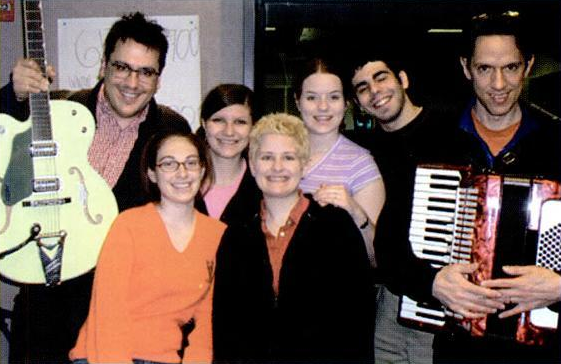
This instrument made appearances in promotional material surrounding the release of the Mink Car album, as well as being used in live performances during the period. After a time it seems to have been relegated to a studio instrument, both for recording and smaller live performances.